
Have you been wanting to improve your health, fitness, or nutrition, but keep feeling too stressed or overwhelmed to get started?
You're not alone. Building healthier habits requires time, energy, and consistency - and trying to change everything at once can quickly become another source of stress. That's why the first pillar of our Living Your Healthiest SF Life series starts with something you're already doing every day: breathing.
Breathwork is the intentional practice of controlling your breathing patterns to influence how your body and mind respond to stress. It's free, accessible, and can be practiced almost anywhere - from your desk between meetings to a quiet corner of Golden Gate Park.
Before adding another workout or wellness habit to your schedule, let's start by learning how to slow down, breathe better, and create a stronger foundation for the healthy habits ahead.
Published: September 21, 2026 / Last Updated: September 30, 2026
TL;DR:
Breathwork is a simple, accessible tool for managing everyday stress while supporting greater body awareness during exercise and recovery.
● Intentional breathing can help regulate the body’s response to physical and mental stress.
● Controlled breathing can support focus, effort management, and the transition from exercise into recovery.
● Short breathing practices can easily fit into workouts, workdays, commutes, and bedtime routines.
● DIAKADI’s personalized training and wellness coaching can help incorporate breathwork, stress management, and recovery into a sustainable routine.
● Alchemy Springs, Spirit Rock Meditation Center, and San Francisco’s outdoor spaces offer local opportunities for breathwork, meditation, and mindful movement.
● Starting with just five minutes of intentional stress reduction each day can help make the practice more approachable and consistent.
Why Are Stress Reduction and Proper Breathing Important to Your Health?
Stress isn't inherently bad. It's a normal physiological response that helps us react to challenges. When stress becomes a constant part of daily life however, it can affect other behaviors that support our health - including sleep, exercise, recovery, nutrition, and breathing.
That's why stress reduction is our first pillar of long-term wellness. Instead of starting your health journey by asking what else you should be doing, try asking yourself how you can create a little more space in your day.
Sometimes, the answer starts with a breath.
The Science Behind Breathwork: How Intentional Breathing Can Impact Your Health
Breathing may be automatic, but how you breathe can influence several systems throughout your body. The research article, “Effects of Diaphragmatic Breathing on Health,” suggests that slow, controlled, diaphragmatic breathing and targeted respiratory muscle training can affect cardiovascular function, respiratory function, stress, and physical performance. Diaphragmatic breathing involves taking slow, deep breaths that engage the diaphragm while minimizing unnecessary movement in the upper chest. A narrative review encompassing 10 systematic reviews and 15 randomized controlled trials found evidence that diaphragmatic breathing can influence autonomic nervous function and may help reduce physiological and psychological stress. Research included in the review also associated diaphragmatic breathing with improvements in measures such as respiratory function, blood pressure, heart-rate variability, and exercise capacity in certain populations—although the authors emphasize that study quality varies and more research is needed.
Your breathing muscles can also be trained, much like other muscles in the body. Research highlighted by the Journal of the American Heart Association examined high-resistance inspiratory muscle strength training (IMST), in which participants inhaled against resistance for approximately five minutes per day. In a randomized trial of adults ages 50–79 with above-normal systolic blood pressure, six weeks of IMST reduced systolic blood pressure by about 9 mmHg while also improving endothelial function—the ability of blood vessels to appropriately dilate. Researchers also observed improvements in nitric oxide bioavailability and reductions in oxidative stress.
Breathing can matter for physical activity, too. The diaphragmatic-breathing review found evidence of improved respiratory function and exercise capacity in some clinical populations, while subsequent research on inspiratory muscle training has found improvements in exercise tolerance in healthy middle-aged and older adults. These findings suggest that practicing or training the muscles responsible for breathing may complement—not replace—regular strength and cardiovascular exercise.
The takeaway: Intentional breathing is more than simply "taking a deep breath." Different breathing practices can train respiratory muscles, influence autonomic and cardiovascular function, and potentially support stress management and physical performance. Just like strength or mobility, how you breathe is another aspect of your health that can be practiced and improved.
DIAKADI Trainer Tips: How to Start Breathwork
At DIAKADI, improving your health isn't about creating a "perfect" wellness routine. It's about developing sustainable strategies that work with your actual life.
For beginners, start small. Try attaching a short breathing practice to something you already do:
● Before starting your workday
● Between meetings
● Before or after a workout
● During your commute
● First thing when you wake up or right before going to sleep
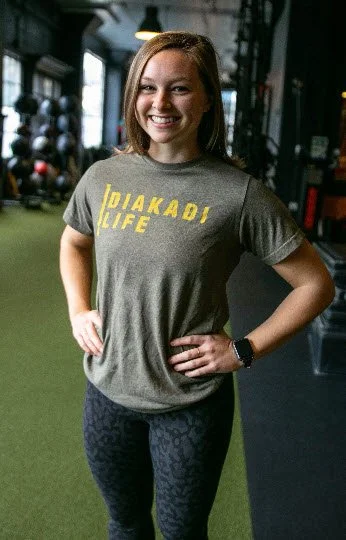
Getting started can be challenging - especially if you’re new to breathwork. To help you have a better understanding of the basics, we consulted with two of our expert, certified Personal Trainers: Aurora Bellone and Anthony D’Andrea.
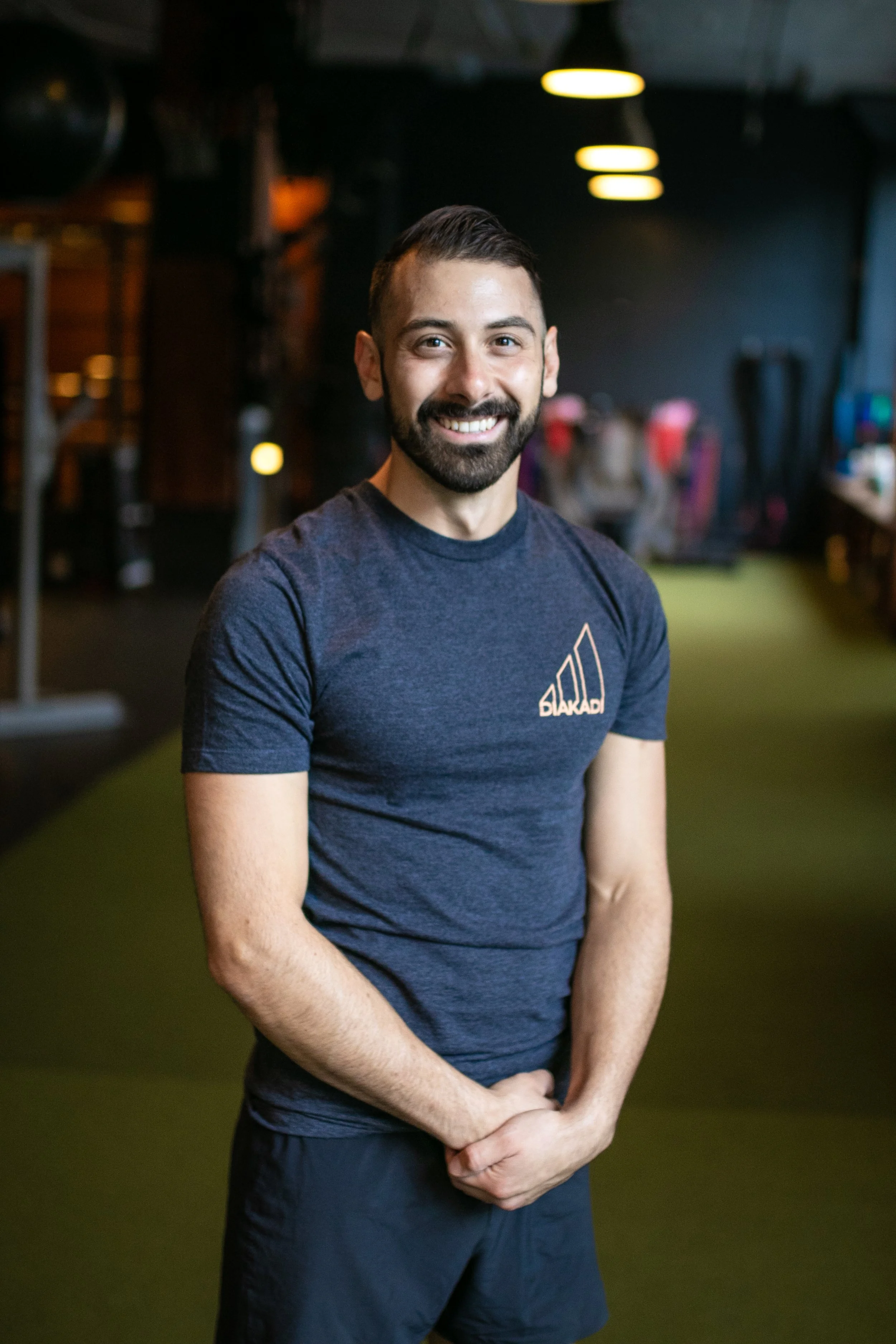
FAQ’s with DIAKADI Trainers
-
There are various breathwork practices and techniques, but at its core, breathwork is intentional, focused, deep, diaphragmatic breathing. Normally, breathing is an involuntary action - meaning we aren’t having to consciously think about it. Therefore, most of us don’t take time out of the day to focus solely on breathing.
When we shift our attention to our breath and focus on taking full, rounded breaths in and out, we’re able to slow down and calm our brain from the constant racing thoughts that consume our brain space. Breathwork can also be a helpful tool for improving your workouts and recovery!
-
Although implementing breathwork might sound easy, it can be quite challenging and feel foreign to many at first. For that reason, it’s important to ease your way into the practice; try aiming for just one or two minutes a day to start. As you continue to practice, you might find that some days you can go longer without realizing, and on other days even a minute may be difficult to get through.
The important thing is not about how long or often you practice breathwork, it’s about taking the practice seriously and giving it your full effort and attention. Breathwork is a tool we can use daily, or even a few times a week, to recenter and calm our mind and body by focusing on the present moment. Staying consistent and committing fully are the key to getting the most out of breathwork.
-
If you’re looking for a short, beginner-friendly breathing exercises to help reset and recenter, try out Trainer Aurora’s box breathing technique:
Place your hand just below your navel and breath in through your nose for 4 seconds,
Feel your belly expand and hold the breath for 4 seconds
Breathe out through your mouth for 4 seconds
Then hold for 4 more seconds.
Do this for 2-3 minutes, or until you feel calm and centered.
If this simple, yet effective technique isn’t right for you, try Trainer Anthony’s favorite technique:
Observe an object intently while extending your exhale. Look at something you might normally overlook like a pen, a table, or the grain of wood on a door.
Study its color, shape, texture, and any small details for at least a full minute.
Notice how your attention shifts and your breath naturally slows as you focus on what is actually in front of you.
Both of these breathwork techniques can interrupt racing thoughts and bring you back to the present moment. “Our goal isn’t to force yourself to feel calm. It’s simply to give your mind one steady thing to focus on. If a four-second hold feels uncomfortable, shorten the count or skip the holds and focus on making your exhale slightly longer than your inhale”.
Give these quick stress reduction tips a try the next time you’re feeling overwhelmed or stressed.
-
“I have clients who can plateau their training because of stress that eats into sleep and their workouts. In those cases we may do a massage session instead where they can relax and breathe slowly for an hour. Restorative sessions can be a relaxing yet ultimately productive way to reduce stress so that the next time we weight train they’ll be more fresh” - DIAKADI Trainer and Massage Therapist Aurora Bellone
-
“Absolutely! When your breathing gets away from you, your thoughts can quickly follow. Your mind may jump to, ‘I can’t do this.’ By returning your attention to a steady breathing rhythm, you focus on what you can control: one breath, one step, and one movement at a time.
Breathwork can be useful at several points in a workout:
● Before training: Use two to five minutes of slow breathing while stretching or foam rolling - especially if you arrive stressed or distracted.
● During endurance work: Find a breathing rhythm that matches a sustainable pace. Lower your headphones and listen to your breath. It can give you helpful feedback, and help you recognize when you’re pushing too hard.
● Between demanding sets: Take a few controlled breaths to regain focus and composure.
● After training: Spend two to five minutes gradually lengthening your exhale as your heart rate comes down.
Slow, controlled breathing after a workout can help shift the body away from a heightened fight-or-flight state and toward rest and recovery. It won’t replace sleep, nutrition, hydration, or thoughtful programming, but it can help begin the recovery process and create a smoother transition out of an intense session” - DIAKADI Trainer Anthony
The Takeaway: Ultimately, the goal with breathwork isn't to eliminate stress. It's to build tools that help you recognize and respond to it more intentionally - which goes beyond just breathwork.
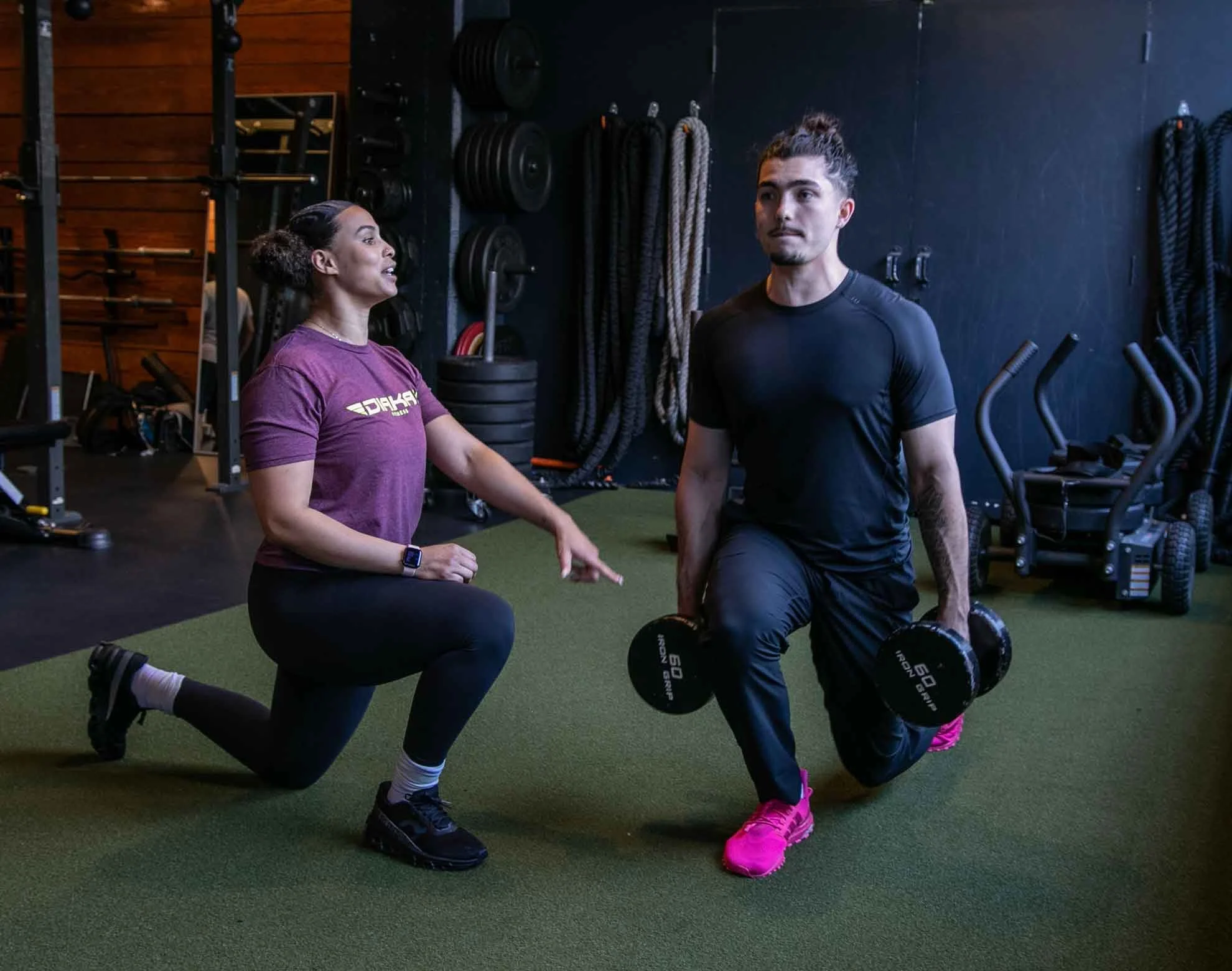
Stress-Reduction Toolkit Beyond Breathwork
Breathwork is a powerful place to start, but managing stress doesn’t always mean sitting still and focusing on your breathing. San Francisco’s walkability, access to nature, active culture, and strong sense of community give us plenty of opportunities to reduce stress throughout everyday life.
● Walk and spend time outdoors. Take a phone-free walk through Golden Gate Park, the Presidio, Ocean Beach, or your own neighborhood. Fresh air, movement, and a change of scenery can provide a simple break from the demands of your day.
● Practice mindfulness. Meditation is one option, but mindfulness can be as simple as noticing your surroundings, eating without your phone, or focusing your attention on one thing at a time. The goal isn’t to stop your thoughts - it’s to practice being more present with them.
● Move your body. Strength training, walking, cycling, yoga, dancing, or hiking can give pent-up energy a productive outlet while supporting your physical health. San Francisco’s active culture makes it easy to find a form of movement you genuinely enjoy.
● Prioritize social connection. Spend intentional time with friends, family, training partners, or your community. Turn your next catch-up into a walk, try a group fitness class, or explore a new SF neighborhood together.
● Reduce unnecessary stimulation. Constant notifications, screens, traffic, noise, and information can add to an already busy day. Try silencing unnecessary notifications, taking a phone-free lunch, walking without headphones, or creating a screen-free buffer before bed.
● Make recovery part of your routine. A rest day, massage, stretching session, sauna, extra sleep, or quiet evening can sometimes be more valuable than pushing through another demanding workout. Recovery isn’t time away from your health routine - it’s part of it.
The takeaway: Your stress-reduction toolkit should be personal. Breathwork may be one tool, while movement, nature, mindfulness, social connection, quieter moments, and intentional recovery provide others. One of the advantages of living in a health-conscious, active city like San Francisco is that many of these tools are already right outside your door.
How DIAKADI Can Help With Stress Management
Your health is shaped by more than what happens during your workout.
DIAKADI's Wellness Coaching takes a personalized approach to the other parts of your lifestyle (i.e. sleep, recovery, habits, and more). Depending on your needs, coaching may incorporate breathwork, mindset coaching, habit tracking, accountability, and lifestyle strategies alongside your fitness program.
DIAKADI Resources:
● Wellness Coaching: Learn how DIAKADI coaches can help integrate stress management, nutrition, recovery, and healthier habits into your lifestyle.
● Personal Training: DIAKADI's personalized training considers lifestyle factors such as stress, mobility, strength training, cardio-programming, and recovery alongside your fitness goals.
● Find Your DIAKADI Coach: Get matched with a coach based on your body, goals, lifestyle, personality, and schedule.
● DIAKADI Fitness Blog: Explore more expert advice on strength, fitness, recovery, longevity, and healthy living in SF.
Where Can You Practice Stress Reduction in San Francisco?
One of the advantages of living in the Bay Area is that stress reduction doesn’t have to happen inside your apartment - or even inside a traditional meditation studio. From guided breathwork and contrast therapy to meditation retreats and time outdoors, there are plenty of ways to practice slowing down, regulating your breathing, and becoming more comfortable managing stress.
Practice Controlled Breathing Under Stress at Alchemy Springs
As DIAKADI Trainer Anthony points out, starting a breathwork practice on your own can feel surprisingly intimidating. Your mind may race, and you may wonder whether you’re doing it correctly. Beginning with a guided experience can take away some of that pressure while you build confidence and learn how your body responds.
One local spot Anthony recommends is Alchemy Springs in San Francisco’s Lower Nob Hill neighborhood. Its Sauna Garden offers guided contrast-therapy experiences that incorporate heat, cold, rest, and controlled breathing. Practicing how to regulate your breath in a supervised, intentionally uncomfortable environment can provide an opportunity to work on staying calm and focused - skills Anthony notes can carry over into both training and everyday stressful situations.
Use San Francisco’s Best Free Resource: The Outdoors
You don’t necessarily need a class or retreat to practice stress reduction. Try leaving your headphones at home and taking a slow, peaceful walk through the National AIDS Memorial Grove or San Francisco Botanical Garden in Golden Gate Park, or head west for a stroll at Sunset Dunes, a 50-acre, two-mile oceanfront park along Ocean Beach.
Instead of treating your walk as another workout, forget about pace, mileage, or calories for a while. Walk slowly, breathe intentionally, notice your surroundings, and pay attention to how your body feels. Sometimes, the healthiest activity on your schedule is the one that isn’t about performance.

Take a Deeper Reset at Spirit Rock Meditation Center
About 45 minutes north of the city, Spirit Rock Meditation Center offers a peaceful setting for anyone interested in exploring meditation more deeply. Rooted in Insight Meditation, Spirit Rock offers classes, daylong programs, drop-in groups, online programs, and multi-day residential retreats for both beginners and experienced meditators. Its silent retreats combine practices such as sitting and walking meditation, mindfulness, teacher guidance, and intentional periods of rest and reflection.
DIAKADI Owner and Trainer, Billy Polson, shared this about his five day silent retreat:
“My mind tends to constantly run, shuffling my to-do lists, planning my next steps, and generally having a hard time just sitting quietly in the moment. So, in typical me fashion, I decided to go all in and signed up for a five-day intensive silent retreat at Spirit Rock.
I lived onsite in pretty minimal accommodations with a group of about 50 other people, although we never spoke to one another. Each day was spent alternating between one-hour seated meditations and one-hour slow walking meditations, with silent chores like gardening or washing dishes.
It was tough. There were a lot of interesting inner voices fighting the process in all sorts of different ways. But slowly, something started to shift.
The day the retreat ended and I reentered the real world, I stopped at a grocery store to grab some water. The lights, sounds, colors, and people were so intensified that I honestly felt like I had done shrooms. I had quieted my mind and calmed my nervous system so dramatically that suddenly the normal world felt like an intense carnival.
That experience taught me a lot about just how overstimulated I normally am without even realizing it. More importantly, I came away with tools for calming my nervous system in the face of intense stress or overstimulation, and lessons about how to actually be present instead of constantly planning whatever comes next.
Those lessons are still incredibly valuable to me today.”
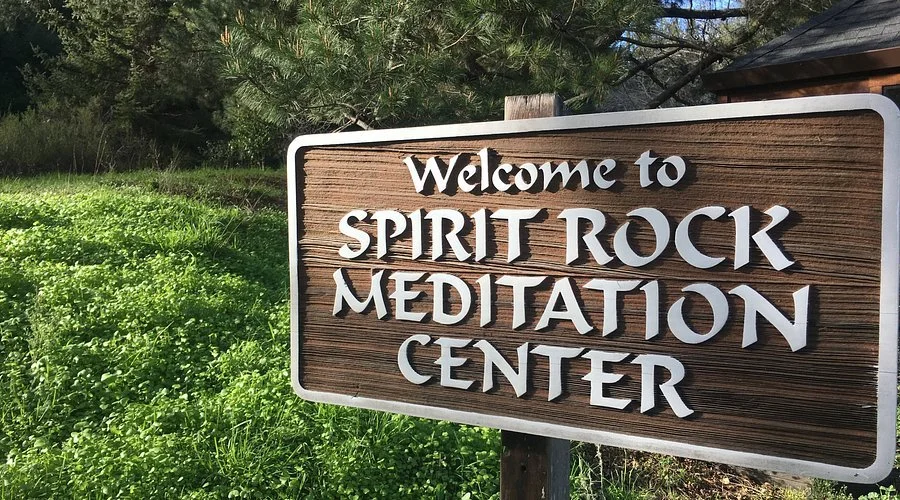
Key Takeaways + Your 7-Day Breathwork Challenge
Breathwork doesn't need to be complicated to be useful. It's free, accessible, and easy to integrate into daily life, making it an approachable starting point for managing stress and building greater awareness of your body.
Your 7-Day Stress Reduction Challenge
For the next seven days, dedicate five minutes each day to intentional stress reduction.
For those of you with extra-busy lives, remember that you often have to take something out of your schedule in order to add something new into it. Take account of your daily and weekly tasks looking for items that you can take off of your schedule in order to make room and prioritize your new breathwork.
Practice a breathing exercise, take a phone-free walk, meditate, or simply sit somewhere quiet and focus on slow, controlled breathing. When you're finished, ask yourself, "Do I feel different than I did five minutes ago?"
You're not trying to become an expert at breathwork in a week. You're discovering which tools help you slow down and creating a habit you can return to when life gets busy.
What's Next: Mobility & Everyday Movement
Breathwork helps you become more aware of your body and how it responds to stress. Next, we'll take that awareness into motion by focusing on how you move throughout your everyday life.
Next in Living Your Healthiest SF Life, we'll explore Mobility & Everyday Movement: how improving mobility, reducing stiffness, and adding more intentional movement to your day can help you feel better, move more confidently, and stay active for the long term—all while taking advantage of this city’s uniquely walkable and active lifestyle.

Author: Billy Polson
Billy Polson, CSCS, is an advanced-level personal trainer with 28 years of experience and the founder and owner of DIAKADI Fitness, a San Francisco personal training facility he has led for more than 22 years. He has been recognized as one of the Top 100 Trainers in America and one of San Francisco’s Top 10 Trainers, and he has helped clients of all ages, fitness levels, and goals build safer, smarter, and more effective training programs.
As a San Francisco resident for more than 30 years and founder of the San Francisco Independent Fitness Studio Coalition, Billy has deep firsthand knowledge of the city’s neighborhoods, independent gyms, training studios, and wellness communities.