
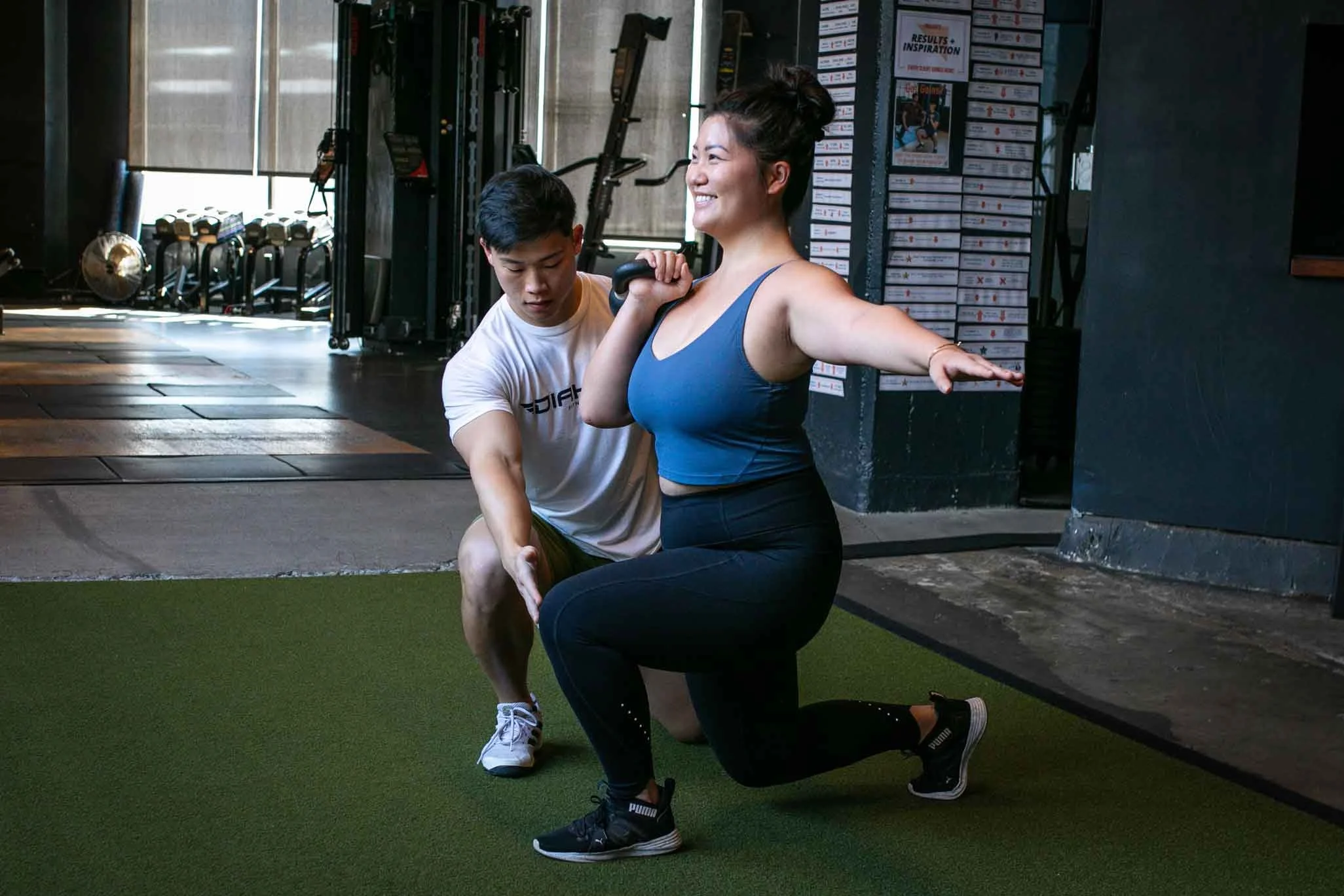
Personal training offers tailored workouts for your body
Personal training delivers faster, safer, and more sustainable results than group fitness by tailoring workouts to your body, goals, and performance needs. While group classes can be motivating and energetic, they can’t match the precision, accountability, and adaptability of one-on-one coaching—especially when your goals include weight loss, strength development, injury prevention, and sports performance.
For individuals who want real progress, not just a good sweat, personal training offers a more strategic and results-driven approach to fitness.
Published: March 15, 2026 / Last Updated: June 26, 2026
TL;DR:
Weight loss: Sustainable fat loss requires a personalized approach; individualized training and nutrition guidance consistently deliver faster, longer-lasting results.
Strength and muscle: Custom loading and programming provide the right stimulus to build muscle efficiently while minimizing injury risk.
Injury prevention: Group fitness cannot deliver the assessments or movement analysis needed to support recovery and reduce setbacks; 1:1 personal training can.
Sports performance: Real athletic progress demands programs tailored to each athlete’s strengths, limitations, and competition schedule.
Bottom line: For these four core goals, personalized coaching wins every time.
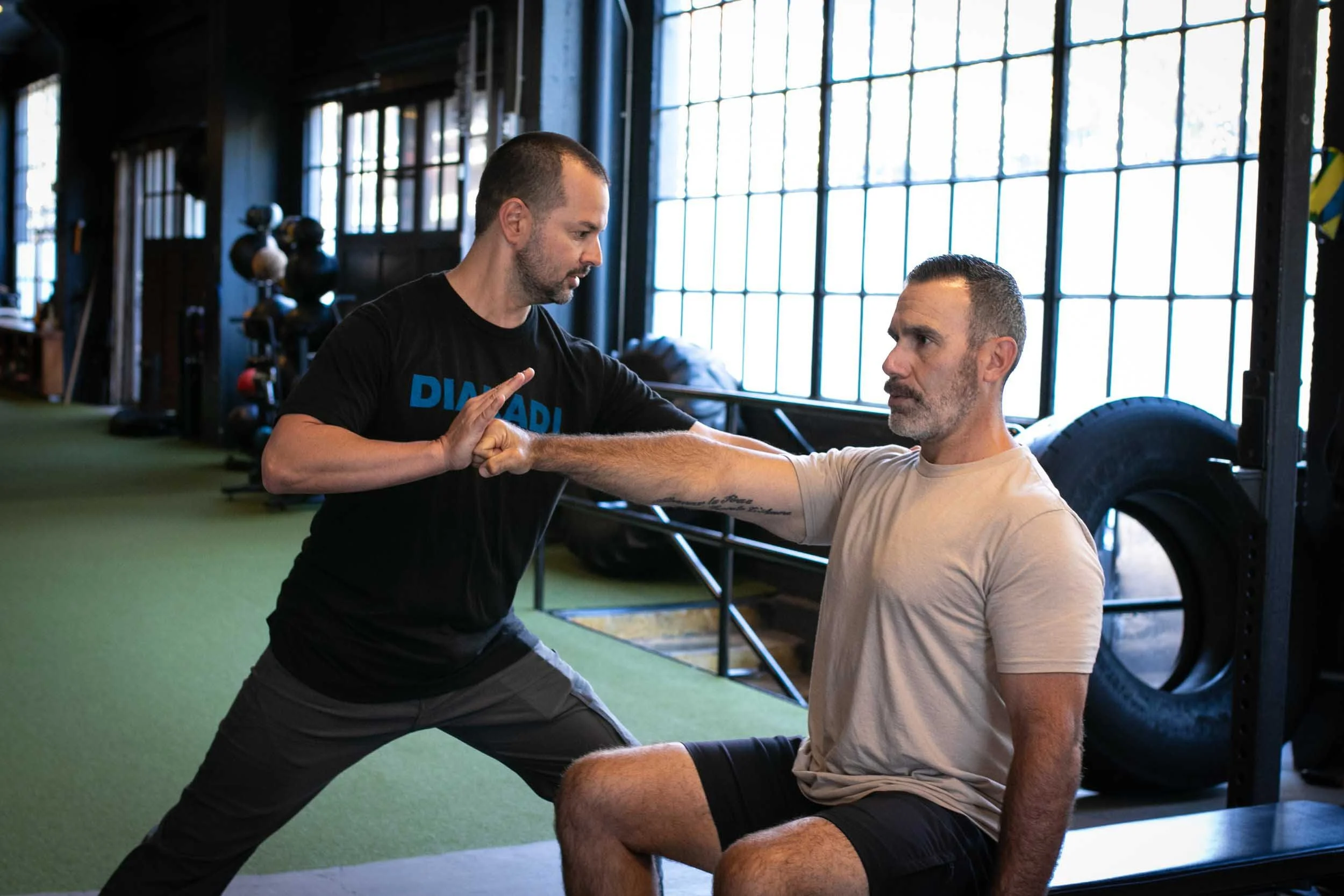
Personal Training vs. Group Fitness: What’s the Difference?
Group fitness classes are designed for the average participant. Personal training is designed for you.
In a group setting, workouts must accommodate a wide range of fitness levels, experience, and physical limitations. This often means exercises are generalized, progressions are limited, and coaching cues are broad. While this works for movement and motivation, it rarely produces optimal results for any one individual.
A personal trainer, on the other hand:
● Builds programs around your specific goals, limitations, and schedule
● Adjusts exercises in real time based on how your body is moving and responding
● Tracks progress and adapts training as your strength, endurance, and skill improve
● Coaches movement quality, not just effort or intensity
This difference becomes critical when results—not just sweat—matter.
1. Personal Training Is More Effective for Weight Loss
Personal training accelerates weight loss by combining individualized programming, metabolic efficiency, and consistent accountability in nutrition, fitness and life habits.
In group classes, intensity is generalized. Some participants are under-challenged and never push enough to create change, while others are pushed beyond what’s appropriate, increasing fatigue or injury risk. Intense group exercise classes often lead to minimal fat reduction and increased loss of muscle mass due to participants’ heart rates staying too high throughout class. Personal training removes that guesswork by matching training intensity to your current fitness level and gradually progressing it over time to maximize your fat burning.
With a personal trainer, you get:
● Customized workouts based on your metabolism, fitness level, and lifestyle
● Strategic strength and conditioning programming to increase calorie burn and lean muscle
● Progressions that evolve as your body adapts and becomes more efficient
● Coaching around nutrition, recovery, consistency, and sustainable habits
At DIAKADI, weight loss isn’t about burning the most calories in one session—it’s about creating long-term body composition change that supports your health, performance, and lifestyle.

2. Personal Training Builds Strength and Muscle More Efficiently
Strength and muscle development require precise loading, intelligent progression, and proper technique—something group classes can’t individualize.
In many group fitness environments:
● Weights are often too light and movements too repetitive to drive real strength gains
● Exercises are modified broadly rather than tailored to individual mechanics
● There’s limited coaching on form, especially under fatigue
Personal training allows for a far more effective approach:
● Progressive overload tailored to your current strength levels
● Exercise selection based on your biomechanics and movement patterns
● Technique coaching to maximize muscle activation and efficiency
● Long-term planning instead of random or repetitive workouts
Whether your goal is lean muscle, functional strength, or improved body composition, one-on-one training produces faster, safer, and more measurable results.m.
3. Personal Training Reduces Injury Risk and Supports Longevity
Personal training prioritizes movement quality and injury prevention—not just intensity.
Group classes move fast by design. That pace leaves little room for:
● Correcting poor movement patterns
● Accounting for past injuries or physical limitations
● Adjusting exercises for an individual’s muscle imbalances or when fatigue affects form
● Assess movement before adding load, speed, or complexity
● Identify imbalances and compensation patterns early
● Modify exercises safely without stopping momentum
● Build balanced strength that supports joints instead of stressing them
This approach is especially valuable if you:
● Have a history of injury
● Experience chronic pain or stiffness
● Want to train consistently without setbacks
Training smarter means training longer—and better.
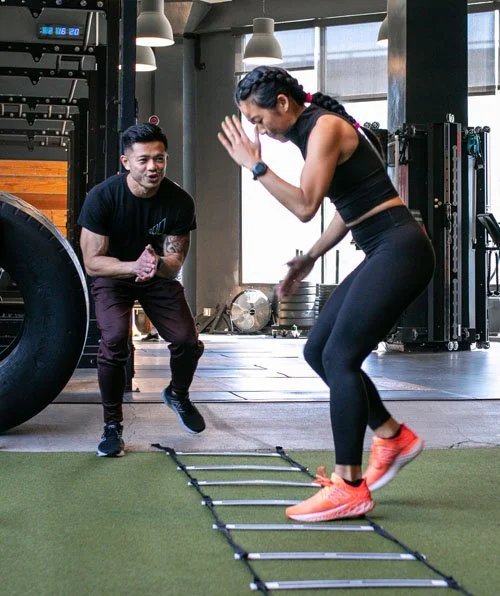
4. Personal Training Improves Sports Performance More Than Group Classes
Sports performance training requires specificity, progression, and expert coaching—elements that group classes can’t provide.
Athletic performance depends on more than just fitness. It requires:
● Strength relative to body weight
● Power, speed, and agility
● Movement efficiency and coordination
● Proper recovery and workload management
Personal training allows for:
● Sport-specific strength and conditioning programs
● Power and speed development tailored to your sport and position
● Movement coaching that transfers directly to real-world performance
● Periodized training aligned with competition schedules or seasons
Whether you’re a recreational athlete or a competitive performer, individualized training produces results that group workouts simply can’t replicate.
-
Group classes can be a great option for:
● General movement and activity
● Community and motivation
● Variety, entertainment and enjoyment
They can play a valuable role in an active lifestyle. However, if your goals include meaningful weight loss, measurable strength gains, injury resilience, or athletic improvement, personal training offers a level of precision, progression, and accountability that group fitness can’t match.
-
At DIAKADI, you train with one of the San Francisco Bay Area’s most experienced coaching teams.
● More than 50 advanced personal trainers
● Most with 10+ years of experience; several with 20–30 years in the field
● A wide range of specialties, from postpartum recovery and youth athletics to triathlon prep, active aging, and complex movement challenges
Every client starts with a comprehensive full-body assessment, not assumptions. From there, we build truly individualized programs with attention to every detail:● Mobility and movement quality
● Strength and muscle development
● Sleep habits and recovery
● Fueling, nutrition, and metabolic health
● Weight loss and body composition
● Sports performance
● Stress reduction and longevity habitsYour program evolves as your body adapts, your goals change, and your life moves forward.
If you’re ready to move beyond generalized workouts and start seeing real, measurable progress, personalized coaching is the clear next step. Complete our brief intake form and we’ll match you with a trainer who’s the ideal fit for your goals, your body, and your lifestyle; you got this, and we got this.

Author: Billy Polson
Billy Polson, CSCS, is an advanced-level personal trainer with 28 years of experience and the founder and owner of DIAKADI Fitness, a San Francisco personal training facility he has led for more than 22 years. He has been recognized as one of the Top 100 Trainers in America and one of San Francisco’s Top 10 Trainers, and he has helped clients of all ages, fitness levels, and goals build safer, smarter, and more effective training programs.
Because Billy has worked as both a personal trainer and group fitness instructor since 1996, he has firsthand experience with the strengths and limits of each format and how to match clients with the training environment that best supports their goals.